Tag:
energy security
The end of energy resource imports from Russia?
On February 24, Russia started the Ukrainian war. Nothing will be the same again. Russia's brutal attack made the ongoing conflict around energy resources all the more obvious. In 2021 alone Russia could have earned PLN 500 billion (or $120 billion). from the export of energy resources. This revenue funds the Kremlin's military spending. Now we are considering whether giving up Russian fossil fuels is possible. Undoubtedly, this would be a radical solution with far-reaching and not entirely known consequences. If this were to happen, solidarity and close cooperation within the EU would be more important than ever before. In this article, we analyze what options Poland has to break its energy dependence on Russia.
17 minutes minutes
The end of energy resource imports from Russia?
On February 24, Russia started the Ukrainian war. Nothing will be the same again. Russia's brutal attack made the ongoing conflict around energy resources all the more obvious. In 2021 alone Russia could have earned PLN 500 billion (or $120 billion). from the export of energy resources. This revenue funds the Kremlin's military spending. Now we are considering whether giving up Russian fossil fuels is possible. Undoubtedly, this would be a radical solution with far-reaching and not entirely known consequences. If this were to happen, solidarity and close cooperation within the EU would be more important than ever before. In this article, we analyze what options Poland has to break its energy dependence on Russia.
17 minutes minutes
Poland has spent more than a trillion zloty (EUR 220 billion) on fossil fuel imports since 2000
In recent months, rising energy prices have caused panic among policymakers. Gas and coal prices on world markets are at record highs, and crude oil is also becoming more expensive. In addition, Poland has become one of the EU countries most dependent on fossil fuel imports.
17 minutes minutes
Poland has spent more than a trillion zloty (EUR 220 billion) on fossil fuel imports since 2000
In recent months, rising energy prices have caused panic among policymakers. Gas and coal prices on world markets are at record highs, and crude oil is also becoming more expensive. In addition, Poland has become one of the EU countries most dependent on fossil fuel imports.
17 minutes minutes
The capacity market in Poland―more expensive than ever
Poland has already held six power auctions. Analysis of their results shows that this mechanism in its current form is not an optimum solution for the country. The capacity market has proved more expensive than anticipated, has failed to curb the increase in electricity prices and, in addition, has contributed to the petrification of the outdated and coal-based generation structure. The arduous task of plugging the coal gap has only just begun, which is why decisions on modernisation and on methods for supporting capacity up to 2030 must be taken urgently.
9 minutes minutes
The capacity market in Poland―more expensive than ever
Poland has already held six power auctions. Analysis of their results shows that this mechanism in its current form is not an optimum solution for the country. The capacity market has proved more expensive than anticipated, has failed to curb the increase in electricity prices and, in addition, has contributed to the petrification of the outdated and coal-based generation structure. The arduous task of plugging the coal gap has only just begun, which is why decisions on modernisation and on methods for supporting capacity up to 2030 must be taken urgently.
9 minutes minutes
From 2025 coal will leave the Polish energy system in waves
Poland’s energy sector is entering a period of major turbulence. The immediate question is the continued operation of the Turów power station since the EU Court of Justice recently ordered the suspension of lignite mining there. This is just the beginning of the problems. After 2025, when public support ends, the first 8 GW of coal capacity may leave the Polish system, and a little later, another 6 GW. The power plants will be shut down due to age and costs. Observing the government’s actions, one can get the impression that all hope lies in the proposed National Agency for Energy Security . Yet, this is a side discussion because no change in ownership structure will improve the situation of the failing coal power industry. Instead, difficult decisions must be made, and the possibilities of supporting the operation of coal-fired power plants with public money are already very limited.
10 minutes minutes
From 2025 coal will leave the Polish energy system in waves
Poland’s energy sector is entering a period of major turbulence. The immediate question is the continued operation of the Turów power station since the EU Court of Justice recently ordered the suspension of lignite mining there. This is just the beginning of the problems. After 2025, when public support ends, the first 8 GW of coal capacity may leave the Polish system, and a little later, another 6 GW. The power plants will be shut down due to age and costs. Observing the government’s actions, one can get the impression that all hope lies in the proposed National Agency for Energy Security . Yet, this is a side discussion because no change in ownership structure will improve the situation of the failing coal power industry. Instead, difficult decisions must be made, and the possibilities of supporting the operation of coal-fired power plants with public money are already very limited.
10 minutes minutes
NABE - the hibernatus of the Polish energy sector

In the film with Louis de Funès, a separate, unreal world was created for the titular hibernatus to make him feel comfortable in the new reality. With the National Energy Security Agency (NABE) that the government is proposing for coal power, it is similar. The ring-fencing of coal assets is necessary because they are making increasing losses, the power companies are in debt, and with the coal burden in the new reality they are running out of finance to invest. However, without a cost-benefit analysis for the economy and society, or an assessment of the risks, NABE, instead of unlocking the transition, may hibernate it and introduce chaos that will threaten Poland's energy security.
9 minutes minutes
NABE - the hibernatus of the Polish energy sector
In the film with Louis de Funès, a separate, unreal world was created for the titular hibernatus to make him feel comfortable in the new reality. With the National Energy Security Agency (NABE) that the government is proposing for coal power, it is similar. The ring-fencing of coal assets is necessary because they are making increasing losses, the power companies are in debt, and with the coal burden in the new reality they are running out of finance to invest. However, without a cost-benefit analysis for the economy and society, or an assessment of the risks, NABE, instead of unlocking the transition, may hibernate it and introduce chaos that will threaten Poland's energy security.
9 minutes minutes

Green hydrogen strategy still too gray
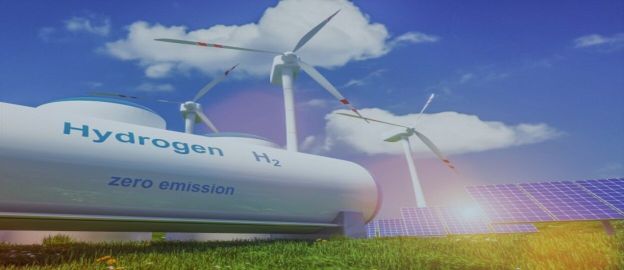
The government is about to conclude its public consultation of the draft Polish Hydrogen Strategy until 2030 with an Outlook until 2040. It gives hope that this time around Poland will join other European countries in the early stages of creating new technological solutions and supply chains. It is a chance for building national potential in a new industry and creating jobs. However, the hydrogen strategy is not yet reflected in other strategic documents defining the future of the Polish energy sector.
11 minutes minutes
Green hydrogen strategy still too gray
The government is about to conclude its public consultation of the draft Polish Hydrogen Strategy until 2030 with an Outlook until 2040. It gives hope that this time around Poland will join other European countries in the early stages of creating new technological solutions and supply chains. It is a chance for building national potential in a new industry and creating jobs. However, the hydrogen strategy is not yet reflected in other strategic documents defining the future of the Polish energy sector.
11 minutes minutes